
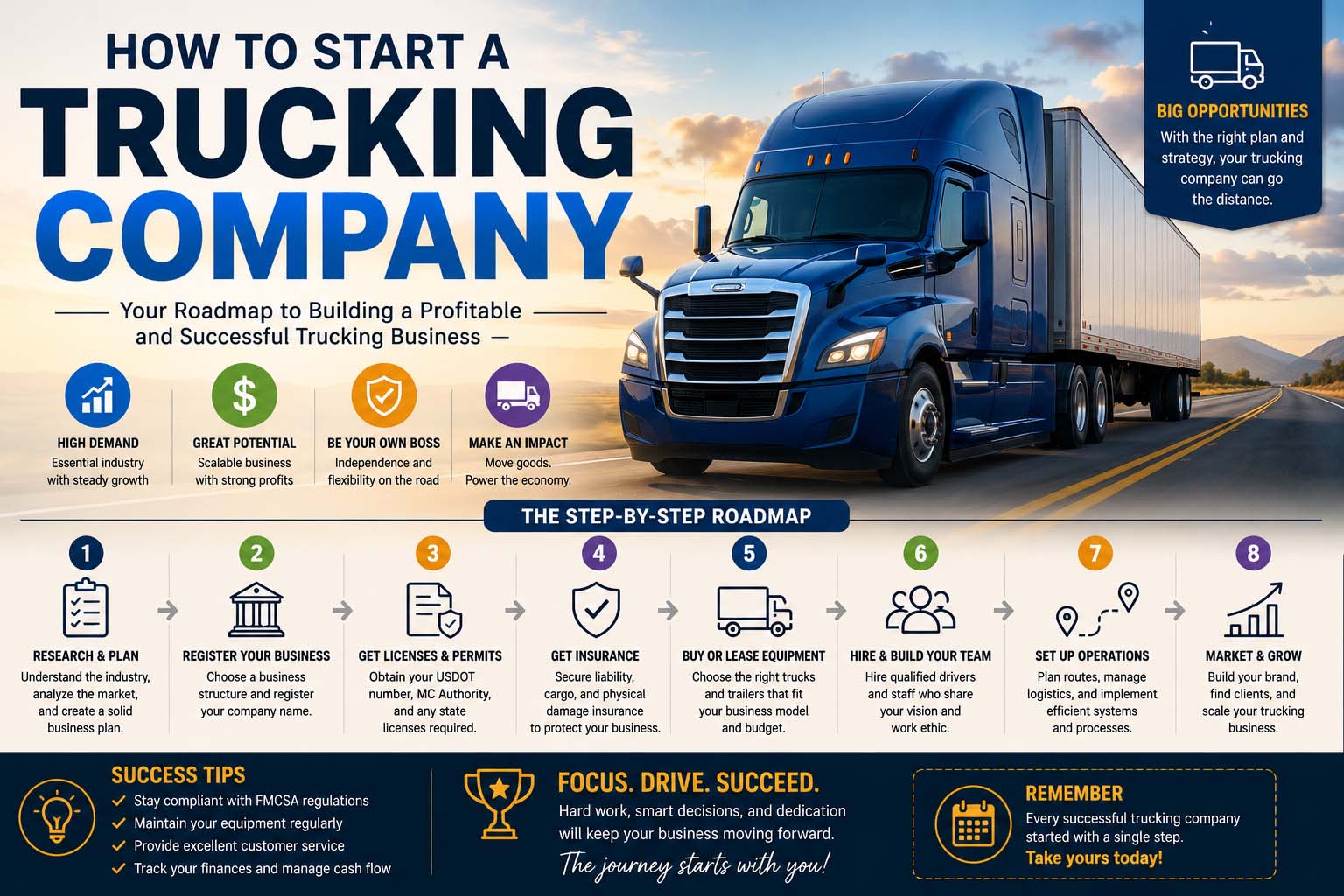
How to Start a Trucking Company: A Step-by-Step Guide for New Business Owners
Learning how to start a trucking company begins with understanding the important role the trucking industry plays in the supply chain. After all, businesses rely on trucking companies to transport products quickly and safely.
For example, some of the biggest benefits include:
- Strong demand for freight transportation
- Opportunities to expand over time
- Multiple freight specialties to choose from
- Ability to operate locally, regionally, or nationwide
- Potential for recurring business customers
Like any business, success depends on careful planning, financial management, and excellent customer service.
Step 1: Decide What Type of Trucking Business You Want
However, like any business, success depends on careful planning.
For example, common trucking businesses include:
| Business Type | Best For | Typical Freight |
|---|---|---|
| Local Delivery | Beginners | Retail goods, food |
| Regional Trucking | Medium-sized operations | Consumer products |
| Long-Haul Trucking | Interstate carriers | General freight |
| Refrigerated Freight | Specialized operators | Food and pharmaceuticals |
| Flatbed Transport | Construction industry | Steel, lumber, machinery |
| Tanker Services | Specialized companies | Fuel and chemicals |
Ultimately, choosing a niche helps determine licensing requirements, equipment, insurance, and marketing strategy.
Step 2: Create a Trucking Company Business Plan
A business plan serves as your roadmap.
Include:
Business Goals
Describe what services you’ll provide and your long-term vision.
Target Customers
For example:
- Manufacturers
- Retailers
- Distributors
- Construction companies
- Agricultural businesses
- Logistics brokers
Revenue Model
Estimate:
- Freight rates
- Monthly shipments
- Fuel costs
- Driver wages
- Maintenance expenses
- Insurance costs
Growth Strategy
Plan how your business may expand over the next three to five years.
Step 3: Register Your Trucking Company
Choose a legal structure that fits your goals.
For example, common options include:
- Sole Proprietorship
- Partnership
- LLC
- Corporation
Generally, many trucking companies choose an LLC because it offers liability protection while remaining relatively simple to manage.
You’ll also need:
- Business registration
- Employer Identification Number (EIN)
- Business bank account
- Accounting system
As a result, keeping business finances separate from personal finances makes tax reporting much easier.
Step 4: Obtain Trucking Licenses and Permits
Transportation businesses operate under strict regulations.
Depending on where you operate, you may need:
- USDOT Number
- Motor Carrier (MC) Number
- International Registration Plan (IRP)
- International Fuel Tax Agreement (IFTA)
- Unified Carrier Registration (UCR)
- Commercial Driver’s License (CDL) if driving yourself
However, requirements vary based on freight type, operating area, and vehicle weight.
Therefore, always verify current regulations before beginning operations.
Step 5: Purchase or Lease Trucking Equipment
The truck is one of the largest investments you’ll make.
Options include:
Buying New
Pros:
- Warranty coverage
- Better fuel efficiency
- Fewer repairs
Cons:
- Higher purchase price
Buying Used
Pros:
- Lower upfront investment
- Easier financing
Cons:
- More maintenance may be required
Leasing
Pros:
- Lower initial costs
- Easier upgrades
Cons:
- Long-term costs may be higher
Additionally, don’t forget supporting equipment like:
- Trailers
- GPS systems
- Electronic Logging Devices (ELDs)
- Safety equipment
- Cargo securement tools
Understanding What Is Procurement can also help owners make informed purchasing decisions when acquiring trucks, trailers, and essential equipment.
How Much Does It Cost to Start a Trucking Company?
One of the most common questions entrepreneurs ask is how much does it cost to start a trucking company.
The answer depends on your business size and equipment choices.
| Expense | Estimated Cost |
|---|---|
| Business Registration | $100–$1,000 |
| Licenses and Permits | $300–$3,000 |
| Insurance | $8,000–$20,000+ annually |
| Used Truck | $30,000–$80,000 |
| New Truck | $120,000–$200,000+ |
| Trailer | $15,000–$60,000 |
| Fuel Reserve | Varies |
| Maintenance Fund | Varies |
| Marketing | $500–$3,000 |
Overall, many first-time owners spend anywhere from $40,000 to more than $200,000, depending on whether they purchase new equipment or lease vehicles.
How Much to Start a Trucking Company on a Small Budget
If you’re beginning with one truck, startup costs can be much lower.
For example, many owner-operators reduce expenses by:
- Purchasing quality used trucks
- Leasing trailers
- Operating from a home office
- Using cloud-based accounting software
- Starting with local freight routes
Ultimately, growing gradually often reduces financial risk.
How to Start a Trucking Company With No Money
Many people search for how to start a trucking company with no money.
Starting completely without funds is difficult because trucks, insurance, and licensing require upfront investment. Still, several financing options may help.
For example, possible funding sources include:
- Small business loans
- Equipment financing
- Commercial truck leasing
- Business partners
- Investor funding
- Government-backed loan programs
- Personal savings combined with financing
Over time, building strong business credit also improves financing opportunities.
How to Start a Trucking Company Without Driving
You don’t have to become a truck driver to own a successful transportation business.
If you’re researching how to start a trucking company without driving, your role becomes managing operations instead of transporting freight.
For example, you can hire experienced CDL drivers while focusing on:
- Business development
- Customer relationships
- Dispatch management
- Hiring
- Accounting
- Compliance
- Marketing
- Fleet growth
In fact, many successful fleet owners rarely drive after launching their companies. Moreover, growing operators may use Human Resources Outsourcing Services to support hiring and workforce administration.
Build Strong Trucking Customer Relationships
Winning repeat business is one of the fastest ways to grow.
For example, potential customers include:
- Manufacturers
- Warehouses
- Freight brokers
- Retail chains
- Construction firms
- Agricultural suppliers
Learning What Is a Broker can help new owners understand how brokers connect businesses and facilitate transactions.
Additionally, reliable communication, on-time delivery, and professional service encourage long-term contracts.
As a result, satisfied customers often recommend dependable trucking companies to others.
Develop an Effective Trucking Marketing Strategy
Marketing isn’t only for large companies.
In fact, even small trucking businesses benefit from professional promotion.
Ideas include:
Create a Professional Website
Include:
- Services
- Coverage area
- Contact information
- Quote request form
Use Local SEO
Optimize your website for searches in your service region.
Network With Freight Brokers
Freight brokers help connect carriers with available loads.
Therefore, building relationships with reliable brokers keeps trucks moving consistently.
Build Your Online Reputation
Encourage satisfied customers to leave positive reviews.
Ultimately, good reviews build trust with future clients.
Manage Your Trucking Company Finances
Cash flow determines whether many trucking businesses survive.
For example, track:
- Fuel expenses
- Insurance
- Repairs
- Payroll
- Taxes
- Freight income
- Loan payments
Using accounting software makes financial management much easier. Additionally, What Is Productivity Software explains how digital tools can help businesses organize tasks and improve efficiency.
Finally, regular financial reviews help identify opportunities to reduce operating costs.
Work With Reliable Trucking Vendors
Reliable suppliers and service providers help keep trucks operating safely and consistently.
In particular, understanding What Is a Vendor can help business owners evaluate companies providing equipment, replacement parts, maintenance, and other essential services.
Common Mistakes New Trucking Companies Make
Avoiding common mistakes can save thousands of dollars.
Buying More Equipment Than Needed
Start small and expand when demand increases.
Ignoring Maintenance
Preventive maintenance helps avoid expensive breakdowns.
Underpricing Freight
Charging too little may generate work but reduce profits.
Therefore, know your operating costs before accepting loads.
Poor Record Keeping
Accurate financial records simplify taxes and business decisions.
Skipping Insurance Coverage
Proper insurance protects your business against unexpected losses.
Trucking Business Startup Checklist
Use this quick checklist before accepting your first load:
- Choose your trucking niche
- Write a business plan
- Register your business
- Obtain licenses and permits
- Purchase insurance
- Buy or lease equipment
- Open a business bank account
- Install required technology
- Hire drivers if needed
- Create a website
- Develop marketing materials
- Build relationships with freight brokers
- Track finances regularly
Frequently Asked Questions About Starting a Trucking Company
How Long Does It Take to Start a Trucking Company?
Many businesses can complete registration, licensing, financing, and equipment purchases within several weeks to a few months, depending on approval times.
Can I Start With One Truck?
Yes. In fact, many successful trucking companies begin with a single truck and expand their fleets over time.
Is Trucking Still a Profitable Business?
It can be profitable when owners carefully manage expenses, maintain reliable equipment, secure consistent freight, and provide excellent customer service.
Do I Need Business Experience?
No. Many first-time entrepreneurs succeed by learning industry regulations, working with experienced professionals, and developing solid management skills.
Can I Own a Trucking Company If I Don’t Have a CDL?
Yes. If you are not driving the truck yourself, you can hire qualified CDL drivers while managing the business.
Building a trucking company takes planning, patience, and smart financial decisions. From choosing the right business model to securing licenses, purchasing equipment, and building customer relationships, every step contributes to long-term success.
Final Thoughts on How to Start a Trucking Company
Many successful trucking companies started with a single truck and a clear business plan. Therefore, focus on providing dependable service, controlling costs, and building strong industry connections. As your reputation grows, you’ll be in a stronger position to expand your fleet, attract larger customers, and create a transportation business that continues to grow for years to come.